
When Commitment Meets Coordination: The Episcopal Diocese of Indianapolis Partners with City Rising
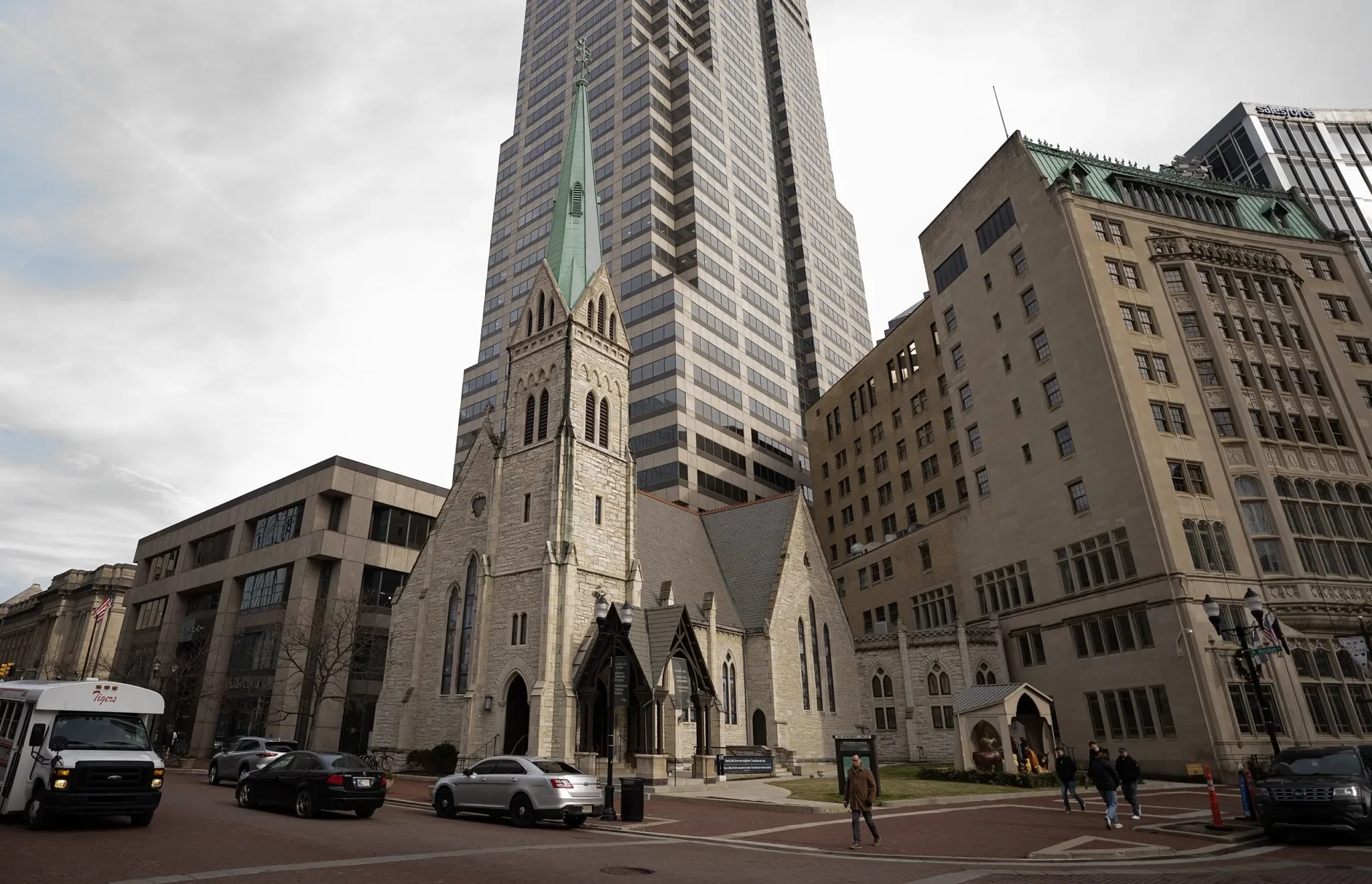
Photo Credit: Jennifer Wilson Bibbs for Mirror Indy
At a time when many institutions are retreating from complexity, some are choosing to move toward it with intention.
The Episcopal Diocese of Indianapolis is one of these intentional institutions.
In the face of rising polarization, intensified immigration enforcement, and increasing forms of state-directed harm impacting vulnerable communities, the Diocese is taking a deliberate step toward strengthening how its commitments translate into coordinated, informed, and effective action that strategically uses its many assets to strengthen their solidarity with Hoosiers living on the front lines of precarity.
This spring, they have invited City Rising to serve as a social impact partner for Mutual Aid & Direct Action: A Strategic Formation Series for Clergy.
From Urgency to Shared Understanding
Across the Diocese, there is a clear recognition of the moment.
Leaders are already responding—supporting individuals and families, navigating complex situations, and making real-time decisions under pressure.
But what has been less available is a shared understanding necessary to form a humanizing and strategic intervention of care:
A common understanding of mutual aid and direct action rooted in historical and contemporary practice that span Western and Indigenous understandings
Alignment across leaders and congregations
Coordinated pathways for responding that extend beyond isolated efforts
Confidence in moving forward in a time defined by a paralysis of uncertainty and fear
This series was designed to meet that need.
The Episcopal Diocese of Indianapolis, which encompasses most of Central and Southern Indiana and includes the storied and historical Christ Church Cathedral, has chosen to meet this moment not by introducing abstract concepts, but by connecting historical knowledge, contemporary conditions, and practical response strategies.
Seeing What’s Already There & Activating Assets
In many communities, the capacity to respond to emerging needs already exists. What is often missing is not effort or commitment, but visibility and coordination across that capacity. Strategic social impact work often involves developing the tools to see what’s already there so we can then apply this knowledge to produce action.
Knowledge, resources, and relationships tend to develop in parallel rather than in connection. One group may know who has available space. Another may be able to mobilize people quickly. Others may be closely attuned to where needs are emerging. Each of these represents a meaningful and necessary component of response, but they are rarely organized in ways that allow them to function together.
An ecosystems approach begins by making these distributed capacities visible—not as isolated assets, but as part of a larger, interconnected system. Rather than asking “What do we need to build from scratch?”, the question shifts to “What is already present, and how might it be aligned, connected, and activated more effectively?”
This shift changes how response is designed. It moves away from fragmented, case-by-case action and toward coordinated pathways that can adapt over time. It also reveals gaps more clearly—not as abstract deficiencies, but as missing connections between existing people, resources, and information.
As part of this series, participants will engage in that process directly. They will map relational, social, and economic capacities across the Diocese, identify where connections already exist and where they do not, and use that insight to develop practical tools for coordinated action. These include a diocesan asset map, a Rapid Response Guide, and a Strategic Alignment Guide that links available capacity to specific forms of action and intended outcomes.
Taken together, these outputs are not simply documents. They are mechanisms for seeing the system more clearly, and for using what is already there in ways that are more intentional, connected, and effective.
City Rising is honored to be selected by The Episcopal Diocese of Indianapolis and work alongside them as they choose to meet this current moment through an intentional practice guided by research to develop humanizing strategies.
We look forward to share updates as this project moves forward.