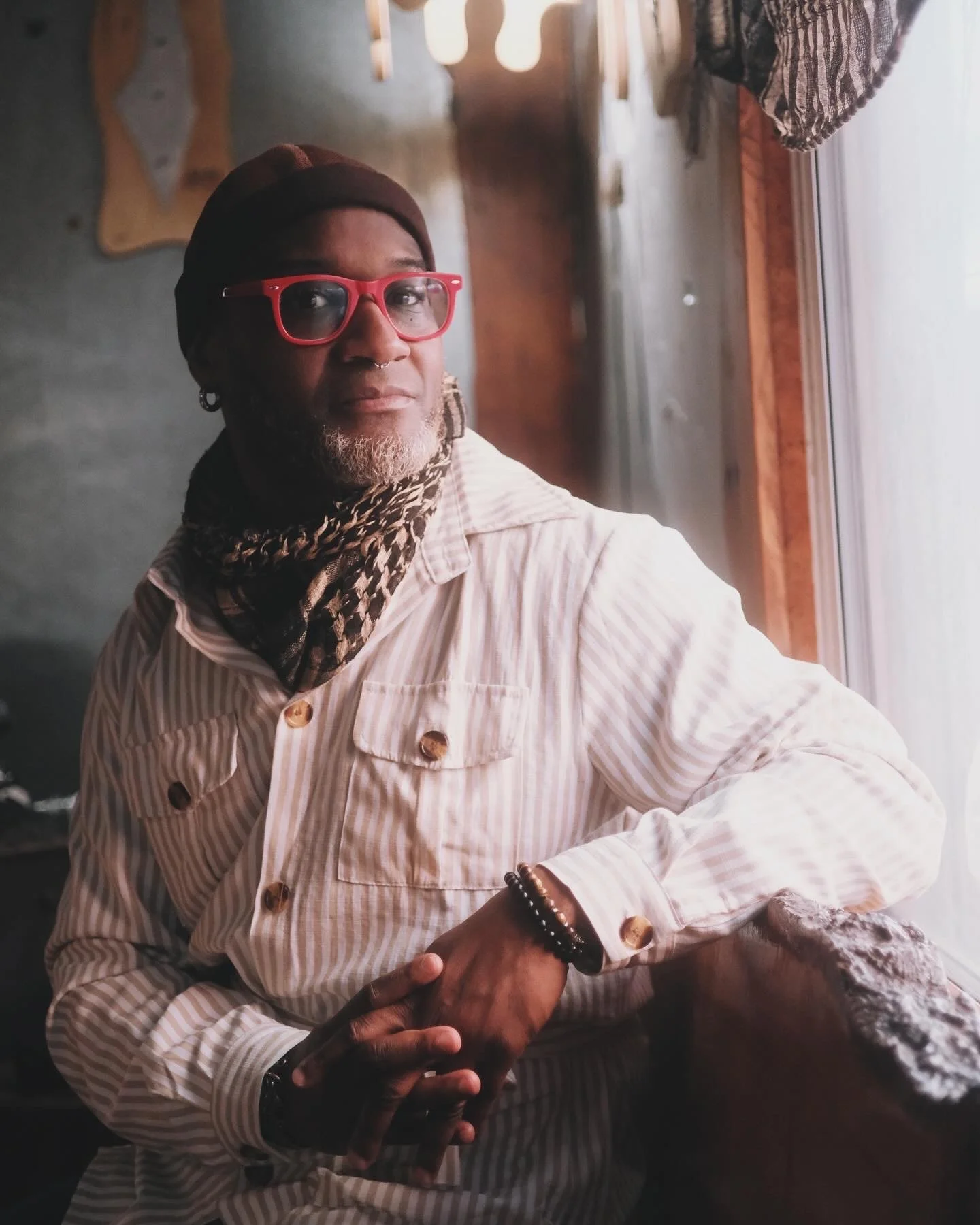
Poetic inquiry, Black ways of knowing, and the future of the former Indiana Women’s Prison
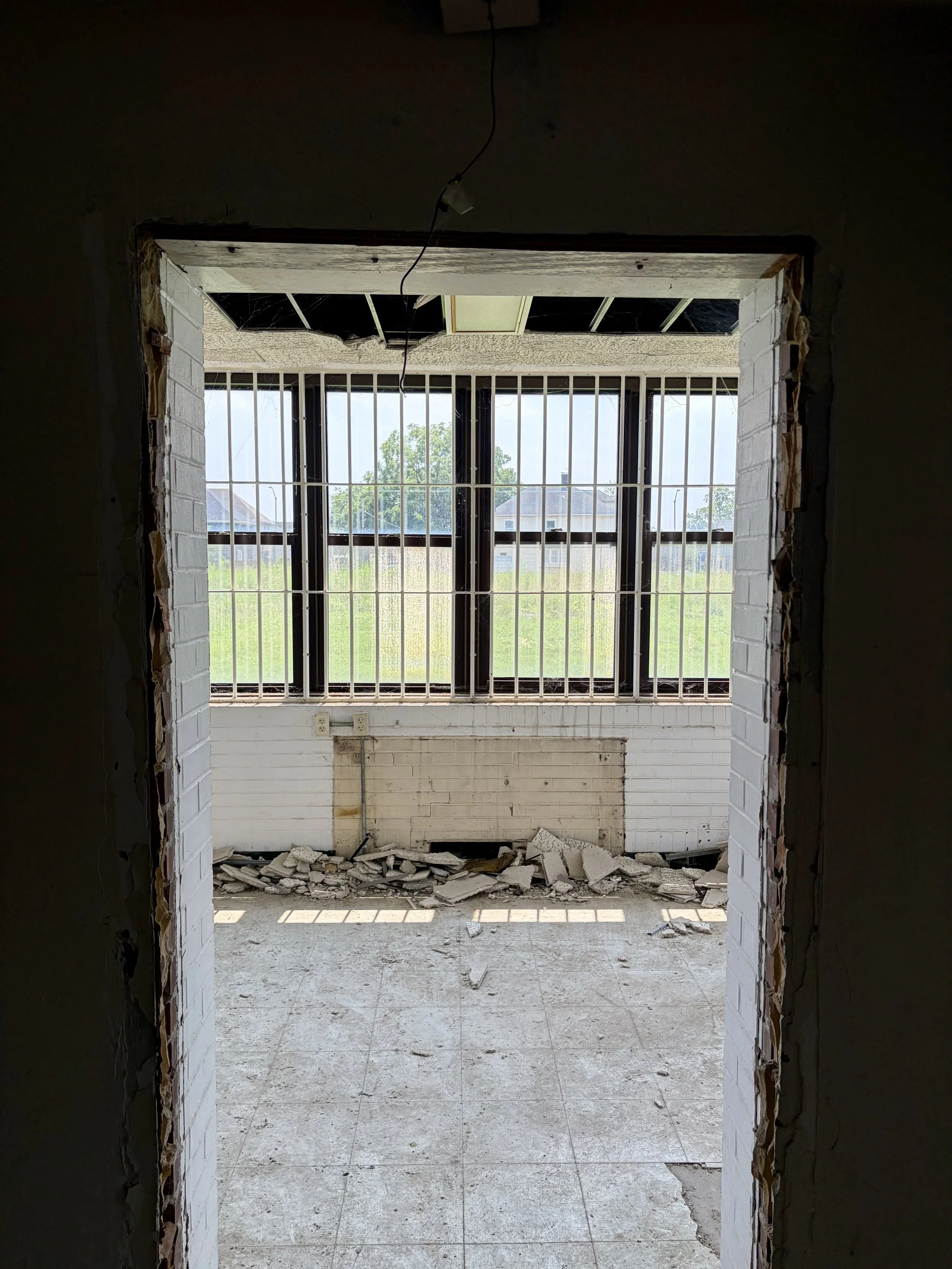
Former Indiana Women’s Prison. Photo by Daniel Gray-Kontar
Before a city decides what to do with a place, it gathers data.
There are the maps, the demographic studies, the property records, the economic projections. There are the environmental assessments and the historical reports. And all of these are all essential parts of a legible and necessary process of development.
But what happens when the data cannot tell us what a place means to the people who have lived there? When the vacant building that shows up on a planning map remains occupied by memory? When a piece of land carries histories that cannot be adequately represented by its current zoning designation?
And what is it that a poem might tell us about place?
I have been sitting with these questions over the past several months as a Poetic Inquiry Data Artist with City Rising, contributing to Beyond These Gates, a project examining the history, memory, and possible futures of the former Indiana Women’s Prison on Indianapolis' Near Eastside. This project is, for me, among the most exciting work that I have done in my short time as a very new resident of this city.
While poetic inquiry has gained recognition within contemporary qualitative research, the idea that poetry can produce knowledge is hardly new.
The Black literary tradition has long served as a primary means of documenting history, interrogating power, transmitting cultural memory, and interpreting the conditions and aspirations of everyday folk. And Black poets have often undertaken forms of inquiry that institutions were unwilling or unable to recognize. My own heroes in this regard include, to name but a few, June Jordan, Jayne Cortez, and Julie Ezelle Patton.
Jordan was a poet, essayist, educator, and activist whose work is inseparable from her concern with how people inhabit the world. But even today, less widely understood is her direct engagement with environmental design and urban planning. For Jordan, language and the built environment were both equally sites where human possibility could be either constrained or expanded.
Through her improvisational and multidisciplinary work in sight, sound, and word, the work of my friend and mentor julie ezelle patton teaches us that knowledge does not always arrive in an orderly argument. Rather, knowledge often emerges through movement, experimentation, association, and the act of paying attention.
And then there is Jayne Cortez, whose work as poet, arts leader, and community activist were never separate parts. For Cortez, spoken word was a carrier of information about the world that conventional public discourse often obscured.
These poets used what is now commonly known as poetic inquiry before there was a name for the practices they wielded as a part of a much longer Black literary tradition. And their work provides a guide for how poetry can investigate, document, and theorize; but above all how poetry can make knowledge available to people in ways that exceed the boundaries of academic or professional institutions.
All of this is to say that when I speak about poetry as data, I do not mean to suggest that poets or qualitative researchers have suddenly discovered a new purpose for our work. Rather, I am asking whether the institutions responsible for shaping our communities are prepared to recognize a kind of knowledge that has been present all along. And I am asking if you are.
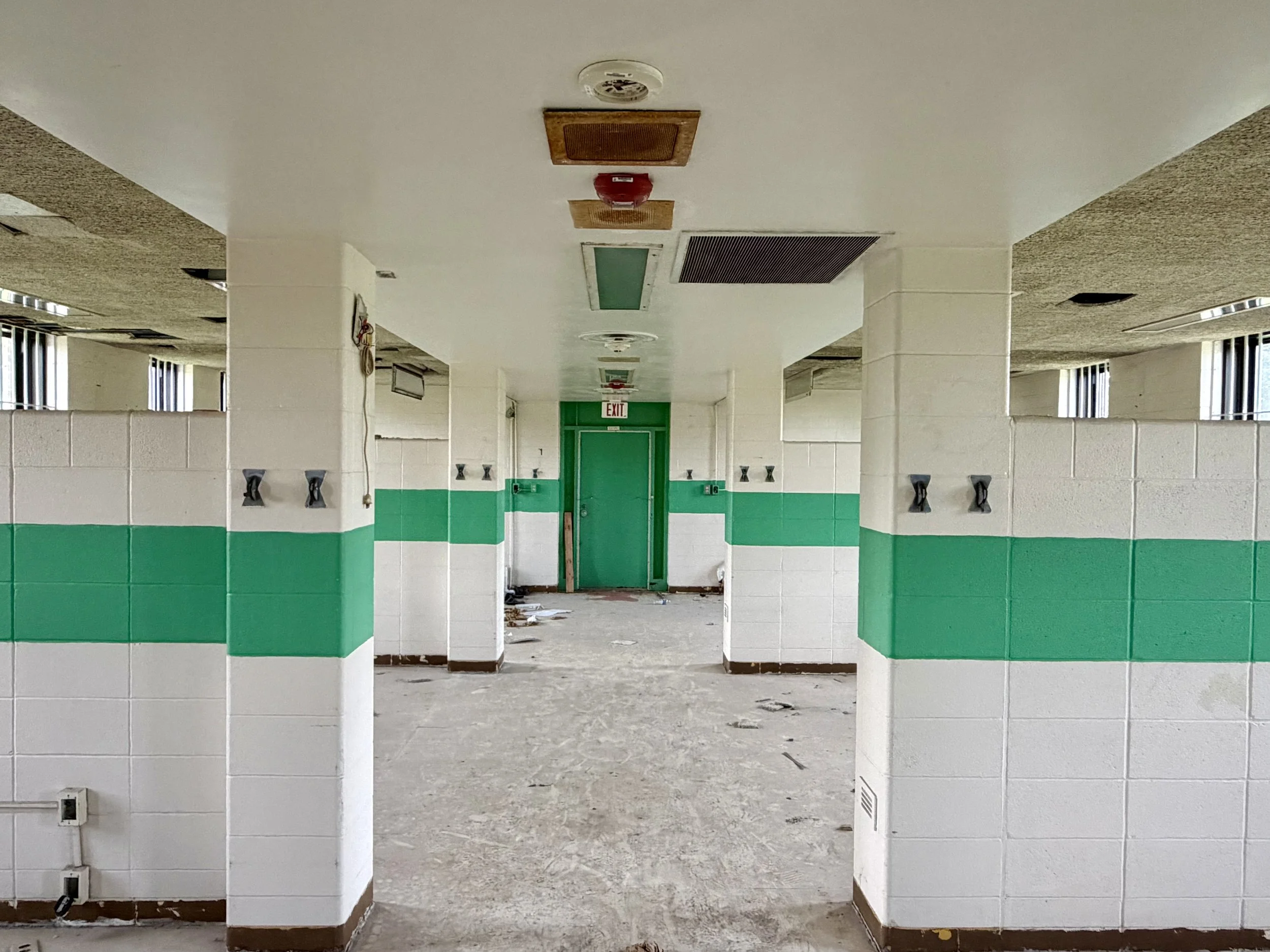
The former Indiana Women’s Prison presents a complicated set of questions about memory, incarceration, home, and the future of land once designated for incarceration, but that now is the site of community voices vying for a new reason for being.
And while it was an institution of confinement, it was also a place where the women who spent many years of their lives formed relationships. In this space of incarceration, they found safety, learned, worked, cared for one another, experienced loss, and developed ways of surviving within conditions they did not choose. For some women, the prison became a kind of home, even as it remained a place of captivity.
(Rest).
This is a deep contradiction that deserves our attention for a myriad of reasons. What does it mean to call a prison home?
And so as the former prison grounds move toward redevelopment, what responsibility do we have to the people whose lives remain connected to that land? These are among the questions that have informed my poetic inquiry. It is a process has involved three interconnected sources of knowledge: historical documents, interviews and recorded testimony, and direct encounters with the physical site.
My poems for Beyond These Gates have emerged through the relationship between these three forms of research. And I have been interested in what happens when these sources speak to one another, particularly when they do not agree.
The institutional archive may describe a particular activity as rehabilitation. A woman's recollection may reveal an entirely different experience of that same activity. A building may appear insignificant within a redevelopment plan while remaining profoundly meaningful to someone who once lived there. A place may be understood publicly through its history of confinement while also containing memories of care, friendship, creativity, and survival.
Poetry offers me a way of attending to these contradictions without requiring that they be resolved.
Through rhythm, repetition, silence, image, and the arrangement of language, I have sought to investigate the relationship between what is documented and what is remembered. And in this way, the poem becomes more than a presentation of research findings where the very act of composing becomes part of the inquiry itself.
Poetry, then, produces and communicates knowledge about the lived human experience, our social relationships, and our meanings of place in ways that help us notice what our existing quantifiable categories cannot. This is not to place poetic inquiry over other methods. Rather, when it is placed at the table across from other forms of research, it can deepen our understanding of the conditions we are attempting to change.
shhhhhh.
what if I told you
we gathered here
to find break beats
in stolen brokenness—
to see tomorrow’s hopscotch
in today’s rain-filled sidewalks.
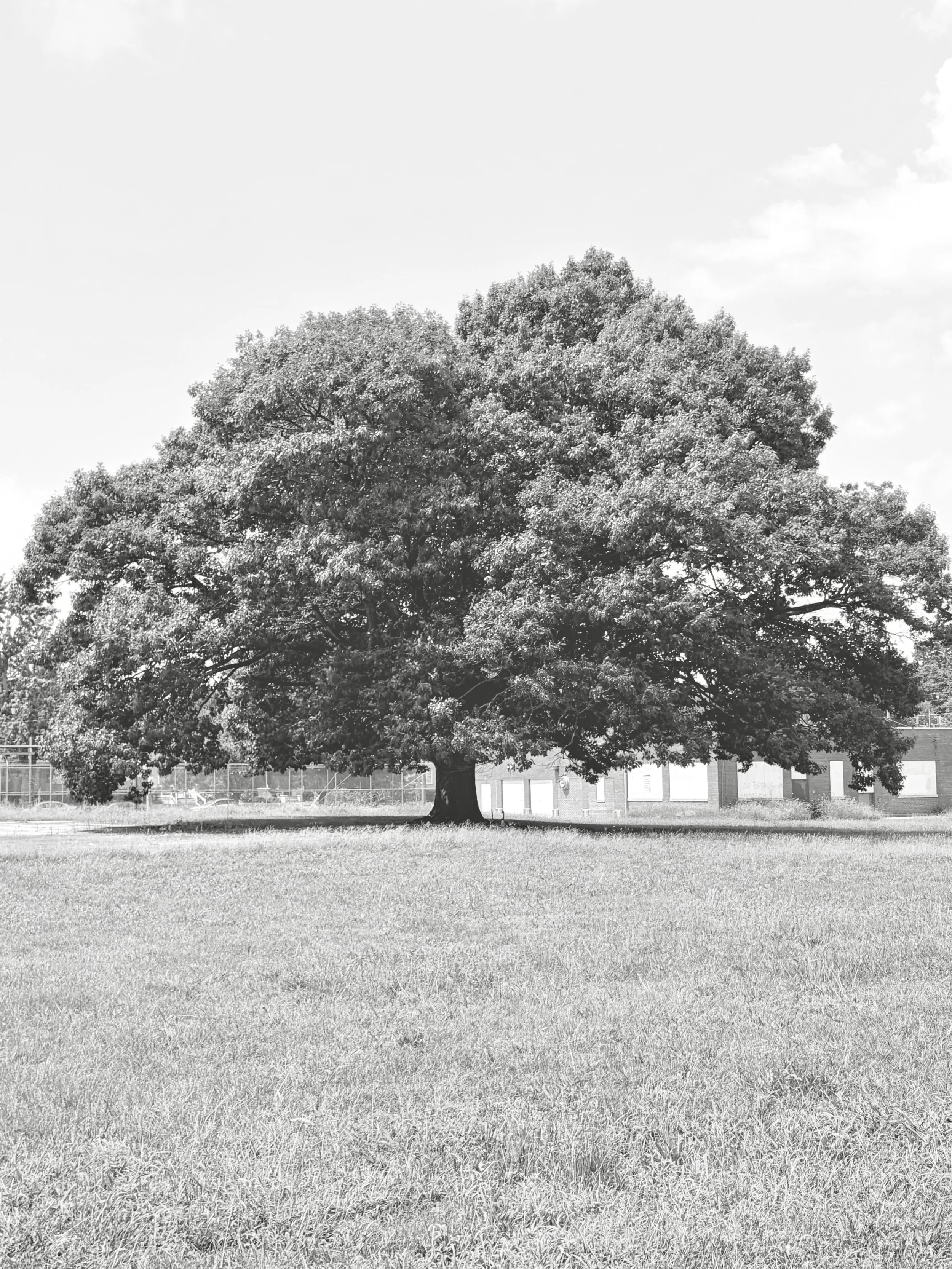
The oak in the courtyard, former Indiana Women’s Prison. Photo by Daniel Gray-Kontar
On Wednesday, November 11, I will join fellow Poetic Inquiry Data Artists Marissa Byers and Corey Ewing for Beyond These Gates: Remembering Home, the Prison, and a Place Yet to Be, presented by City Rising as part of the 2026 Spirit & Place Festival.
The evening brings together poetry, recorded voices, video, live conversation, and music to explore the histories and possibilities held within the former Indiana Women's Prison site. The program also includes music and video art by Kristin Newborn.
I hope you will come not simply to hear poems or experience an evening of artistic expression. I hope you will come prepared to listen differently. To consider how a woman's memory might complicate an official history. To consider what a building can mean beyond its architectural purpose. To consider what becomes possible when the knowledge carried by communities is understood as essential to decisions about their future.