
Upcoming Social Impact Learning Events

Doing Collective Impact: A Practical Framework for Creating Change Together
Big, entrenched problems have never been solved by one organization working alone. But at a moment when government resources, large institutions, and traditional sources of funding may be retreating, shrinking, or becoming less reliable, the ability of communities and organizations to work collectively may matter more than ever.
Collective Impact offers a framework for doing that work: bringing organizations, institutions, funders, and community members into greater alignment around a shared vision and creating the conditions for coordinated, sustained action. In this one-hour introductory conversation, we'll unpack what Collective Impact is, why it matters, and some of the conditions that help it succeed.
Along the way, we'll share practical lessons from City Rising's Social Impact Studio Notebook—including observations, tools, and insights about Collective Impact that we haven't shared anywhere else. This isn't about one hero organization. In this conversation, we'll explore what Collective Impact really means, the conditions that allow it to take root, and real examples of communities building more equitable systems through shared purpose rather than siloed effort.
This isn't about one hero organization saving the day. It's about the collaborative, relational work of building something bigger together. Whether you're new to this framework or looking to deepen how you already practice collaboration, join us for an open, curious conversation about what's possible when we stop working alone.
If Collective Impact is completely new to you or you've been doing collaborative work for years, this conversation will offer an accessible introduction, practical insights, and questions to carry back into your own work. This is a free, public conversation. Come with your questions, your skepticism, and your curiosity.

Sustainable Service: Healing, Culture, and the Work of Staying Whole
Join us for a conversation with Dr. Zelideh Martinez Hoy, health behavior scholar, somatic practitioner, and educator, as we explore what it really takes to sustain a life of service without losing yourself in the process.
Dr. Martinez Hoy brings a culturally grounded, somatic lens to topics too often left out of professional development spaces — the emotional and cultural labor carried by those who show up for their communities, families, and clients.
We'll dig into:
Compassion fatigue — recognizing it, naming it, and understanding why it hits culturally-rooted caregivers and helpers differently
Somatic awareness — what it means to listen to the body as a source of wisdom, not just a site of stress
Cultural labor — the often-invisible work of navigating multiple identities and expectations while serving others
Sustainable service — moving from burnout and self-sacrifice toward practices that let helpers, healers, and changemakers stay in the work for the long haul
Whether you're a nonprofit professional, educator, coach, or community organizer, this conversation offers grounded, practical wisdom for protecting your own well-being while doing work that matters.
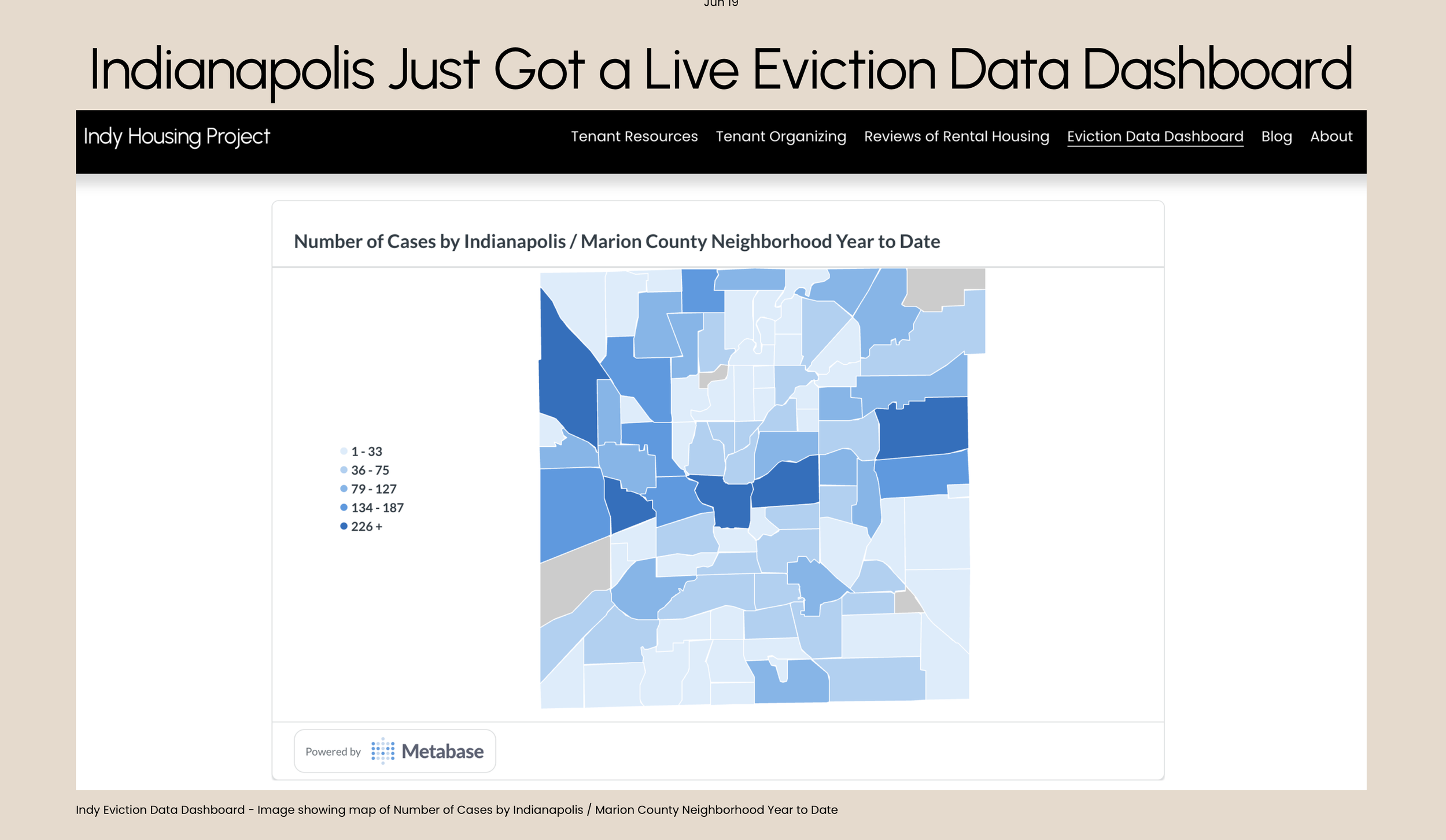
From Data to Action: Building Indianapolis’ Live Eviction Data Dashboard
Indianapolis experiences hundreds of eviction filings each week, yet until recently, residents, advocates, researchers, and policymakers had limited access to timely, public information about where evictions were occurring and how trends were changing over time. The new Indy Housing Project Eviction Data Dashboard was created to help change that by providing near real-time eviction data, interactive maps, and public access to information that can support research, advocacy, tenant organizing, service delivery, and informed decision-making.
Join City Rising for a conversation with Patricia Basile, Kristina Trinity Hartley, and Mark Latta as they discuss why the dashboard was created, what eviction data reveals about housing instability in Marion County, and how community-based partnerships can develop practical technology tools that strengthen public understanding and response.
Alternative Funding Models
Most funding models—grants, philanthropy, lending—are built on scarcity, competition, and top-down control. This webinar explores what becomes possible when we move beyond those constraints toward more democratic, participatory approaches to resourcing social impact. We’ll examine how alternative models—like collective giving, community-controlled funds, and shared ownership—shift power and decision-making. Together, we’ll consider how funding can better align with the realities of complex ecosystems rather than reinforcing silos. This is a conversation for anyone ready to rethink how money moves—and who gets to decide.
Panelists:
Diana Medina, Deputy Director of Fondo Semillas, a feminist fund in Mexico with 35 years mobilizing resources for grassroots feminist movements.
Elle Griffen writes The Elysian where she explores a utopian future through essay collections and print pamphlets. Recent projects include We Should Own the Economy and Let Cities Build Utopia, her deep-dive research into land trusts, community owned towns, and cities that benefit residents—not private developers or far away governments.